Search engine optimization is no longer just about inserting keywords into a webpage. Modern SEO requires a well-planned strategy of SEO that aligns with user intent, technical website performance, high-quality content, and search engine guidelines. Businesses that rely on random SEO tactics often struggle to achieve sustainable rankings because they lack a structured approach.
An effective strategy of SEO helps websites attract qualified traffic, improve visibility in search engine results, and build long-term authority. Instead of chasing quick wins, successful SEO focuses on creating valuable content, optimizing the user experience, and continuously improving website performance based on data.
Whether you manage a business website, an eCommerce store, or a personal blog, following an expert SEO strategy can help you achieve consistent organic growth and stay competitive in today’s search landscape.
What Is a Strategy of SEO?
A strategy of SEO is a comprehensive plan designed to improve a website’s visibility in search engines by combining keyword research, content creation, technical optimization, on-page SEO, user experience improvements, and authority building.
Unlike isolated SEO tasks, a complete strategy ensures every optimization effort supports a common objective. It creates a roadmap for increasing organic traffic while providing valuable information that satisfies user needs.
A strong Strategy of SEO typically includes:
- Understanding target audiences
- Identifying search intent
- Performing keyword research
- Creating high-quality content
- Optimizing website structure
- Improving page speed
- Building website authority
- Tracking SEO performance
When these elements work together, websites are more likely to achieve sustainable rankings rather than temporary improvements.
Why Every Website Needs an Strategy of SEO
Publishing content without a clear plan often leads to inconsistent results. A structured Strategy of SEO provides direction and helps websites compete effectively in search results.
Improves Organic Visibility
Search engines prioritize websites that consistently publish helpful, relevant, and well-optimized content. A strategic approach increases the chances of appearing for valuable keywords that potential customers are actively searching for.
Builds Topical Authority
Instead of creating unrelated articles, an SEO strategy organizes content around core topics. This helps search engines recognize your expertise while making it easier for users to find related information.
For example, an SEO agency could create content clusters covering:
- Keyword research
- Technical SEO
- On-page SEO
- Link building
- Local SEO
- Content optimization
This interconnected structure strengthens overall topical authority.
Generates Qualified Traffic
Not all traffic is valuable. Ranking for keywords that match user intent attracts visitors who are genuinely interested in your products, services, or information.
Quality traffic often results in:
- Higher engagement
- Lower bounce rates
- Better conversions
- Increased trust
Supports Long-Term Growth
Paid advertising stops generating traffic once the budget ends. Organic SEO continues delivering value over time as optimized pages maintain their rankings and attract visitors consistently.
Understand Search Intent Before Choosing Keywords
One of the biggest mistakes in SEO is targeting keywords without understanding why users search for them.
Search engines prioritize pages that best satisfy user intent rather than pages that simply contain matching keywords.
Informational Intent
Users want to learn something.
Examples include:
- How SEO works
- SEO checklist
- Strategy of SEO
- On page SEO guide
Content should educate readers through detailed explanations, examples, visuals, and practical advice.
Navigational Intent
Users already know where they want to go.
Examples include:
- Google Search Console
- Google Analytics
- Ahrefs login
These searches usually lead users directly to a specific website.
Users compare products or services before making a decision.
Examples include:
- Best SEO tools
- SEO agency reviews
- SEO software comparison
Content should provide balanced comparisons, feature breakdowns, and expert recommendations.
Transactional Intent
Users are ready to take action.
Examples include:
- Hire SEO agency
- Buy SEO audit
- SEO services pricing
Landing pages and service pages perform best for these keywords.
Understanding search intent ensures every page delivers exactly what users expect.
Start with Comprehensive Keyword Research
Keyword research forms the foundation of every successful SEO campaign. Instead of selecting keywords based only on search volume, focus on relevance, user intent, and achievable ranking opportunities.
Identify Your Core Topics
Begin by listing the primary subjects related to your business.
For an SEO website, these may include:
- Strategy of SEO
- Technical SEO
- Local SEO
- WordPress SEO
- Content marketing
- Link building
- SEO audits
Each topic can become a content hub containing multiple supporting articles.
Focus on Long-Tail Keywords
Long-tail keywords usually have lower competition and higher conversion potential because they address specific user needs.
Examples include:
- strategy of seo for beginners
- strategy of seo for small businesses
- how to create an Strategy of SEO
- Strategy of SEO for local businesses
- Strategy of SEO checklist
These keywords help attract highly targeted visitors.
Analyze Keyword Difficulty
Search volume alone does not determine a keyword’s value.
Evaluate:
- Competition level
- Domain authority of ranking websites
- Content quality
- Search intent
- Backlink profiles
Sometimes a lower-volume keyword delivers significantly better results because ranking is more realistic.
Use Keyword Clustering
Rather than creating multiple articles targeting similar keywords, group related terms into a single comprehensive page.
For example:
Primary keyword:
- strategy of seo
Related keywords:
- SEO strategy
- search engine optimization strategy
- SEO roadmap
- SEO planning
- SEO techniques
- SEO best practices
- SEO framework
This approach improves topical relevance while preventing keyword cannibalization.
Perform Competitor Analysis
Learning from competitors helps identify opportunities without copying their content.
A proper competitor analysis reveals:
- High-performing pages
- Keyword gaps
- Content depth
- Backlink opportunities
- Internal linking strategies
Study websites that consistently rank on the first page and ask:
- Why does this page rank?
- What questions does it answer?
- How comprehensive is the content?
- What information is missing?
- How can I provide more value?
The goal is not to imitate competitors but to create content that is more helpful, more current, and easier to understand.
Create a Content Strategy Instead of Random Articles
Publishing random blog posts rarely builds authority.
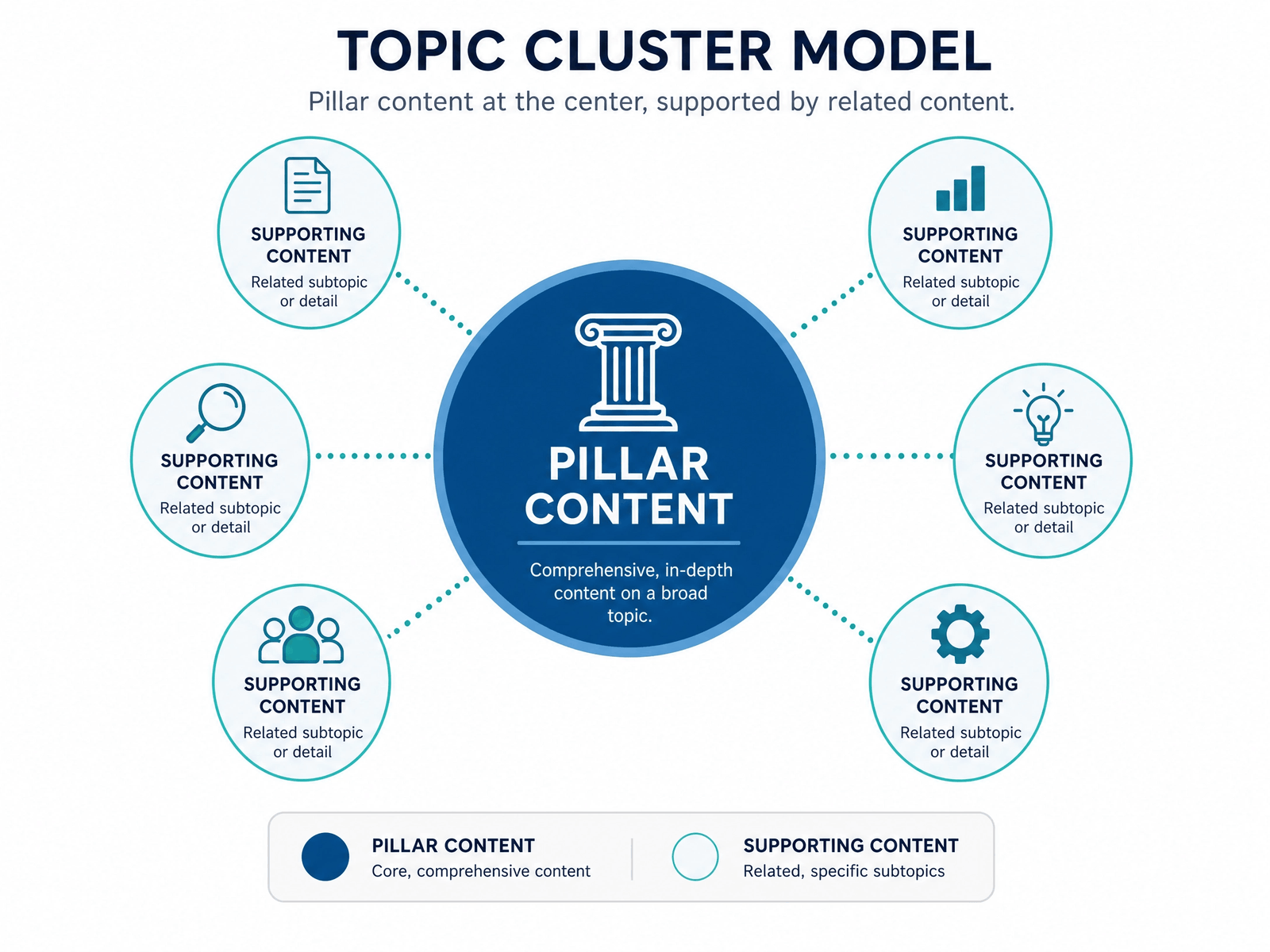
Instead, organize content into logical topic clusters.
Pillar Content
A pillar page covers a broad topic comprehensively.
Example:
Strategy of SEO
This page introduces all major SEO concepts.
Supporting Content
Supporting articles explore individual topics in greater detail.
Examples include:
- Keyword Research Guide
- Technical SEO Checklist
- Internal Linking Best Practices
- Content Optimization Guide
- SEO Audit Checklist
- Link Building Techniques
Each supporting article links back to the pillar page while also connecting to related resources.
This structure helps users navigate your website and allows search engines to better understand relationships between topics.
Develop a Strong On Page Strategy of SEO
Even excellent content can struggle to rank without proper on-page optimization.
Write Helpful Titles
Your page title should clearly describe the content while naturally including the target keyword.
A good title should:
- Match user intent
- Be descriptive
- Encourage clicks
- Avoid unnecessary keyword repetition
Strengthen Your Technical SEO
Even the best content may struggle to rank if your website has technical issues. Technical SEO ensures search engines can crawl, index, and understand your pages efficiently.
Focus on these essentials:
- Improve page speed and Core Web Vitals
- Make your website mobile friendly
- Use HTTPS for secure browsing
- Fix broken links and crawl errors
- Create XML sitemaps and robots.txt files
- Add structured data where appropriate
Regular technical audits help identify issues before they affect your rankings.

Build High Quality Backlinks
Backlinks remain one of Google’s strongest ranking signals. However, quality is far more important than quantity.
Effective ways to earn backlinks include:
- Publishing original research and guides
- Creating shareable resources
- Guest posting on reputable websites
- Building relationships within your industry
- Reclaiming broken or unlinked mentions
Avoid buying backlinks or participating in link schemes, as these practices can lead to search engine penalties.
Track Your SEO Performance
A successful strategy of SEO requires continuous monitoring and improvement.
Track important metrics such as:
- Organic traffic
- Keyword rankings
- Click through rate
- Conversion rate
- Bounce rate
- Core Web Vitals
Review your data regularly to identify opportunities for optimization and content updates.
Common SEO Mistakes to Avoid
Many websites struggle because they repeat the same avoidable mistakes.
Some of the most common include:
- Ignoring search intent
- Publishing thin or duplicate content
- Keyword stuffing
- Neglecting technical SEO
- Poor internal linking
- Failing to update outdated content
Avoiding these issues helps maintain steady long-term growth.
The Future of SEO
Search engines continue to evolve with advancements in artificial intelligence and user behavior. Modern SEO is no longer just about rankings; it is about providing the best possible experience for users.
To stay competitive:
- Create people-first content
- Demonstrate expertise and trustworthiness
- Optimize for AI-powered search and featured snippets
- Keep your website technically sound
- Update content regularly to maintain accuracy
Businesses that focus on delivering genuine value will be better positioned for future algorithm updates.
Frequently asked Questions
What are the main components of an SEO strategy?
The main components of an strategy of SEO include keyword research, content planning, on page SEO, technical SEO, link building, user experience optimization, and performance tracking. Together, these elements help improve search visibility and organic traffic.
Can small businesses benefit from an strategy of SEO?
Yes. A well planned SEO strategy helps small businesses compete with larger brands by targeting relevant keywords, attracting local customers, and generating consistent organic traffic without relying solely on paid advertising.
Is an SEO strategy different for ecommerce websites?
Yes. Ecommerce SEO strategies focus more on optimizing product pages, category pages, product descriptions, site navigation, structured data, and transactional keywords to increase product visibility and sales.
How do you know if your SEO strategy is working?
You can measure the success of your SEO strategy by tracking improvements in organic traffic, keyword rankings, click through rate, conversions, engagement metrics, and search visibility using analytics and SEO tools.
Should you create an SEO strategy before launching a website?
Yes. Planning your SEO strategy before launching a website helps create a logical site structure, target the right keywords, optimize content from the beginning, and avoid costly changes later.
How often should an strategy of SEO be reviewed?
Most SEO experts recommend reviewing your strategy every three to six months. However, you should also evaluate your strategy after major search engine algorithm updates or significant changes in your business goals.
Does publishing more content improve SEO?
Not always. Publishing high quality, relevant, and well optimized content consistently is more effective than publishing a large number of low quality articles. Search engines prioritize helpful content that satisfies user intent.
What is the difference between an SEO strategy and an SEO campaign?
An SEO strategy is the long term plan that defines your goals and approach, while an SEO campaign is a specific set of actions, such as optimizing a group of pages or targeting a new keyword, to achieve those goals.
Conclusion
An effective strategy of SEO is built on planning, consistency, and continuous improvement. From understanding search intent and creating valuable content to optimizing technical performance and earning authoritative backlinks, every element contributes to stronger search visibility.
SEO is not a one-time task but an ongoing process. By following proven best practices and adapting to changes in search engine algorithms, you can build lasting authority, attract qualified organic traffic, and achieve higher search rankings over time.